Archives: News
News and reviews
Build or Buy? Upcoming GBA Webinar Explores Software Strategy for Geoprofessional Firms
As geoprofessional firms adopt new technology, many face an increasingly important decision: Should they develop their own software tools or invest in established commercial platforms?
GBA’s next Knowledge Sharing Webinar will help firm leaders and technology decision-makers evaluate that choice. Build vs. Buy: Navigating Software Strategy in Geoprofessional Practice will be presented by Seequent on Thursday, October 29, 2026, at 2 p.m. Eastern Time.
Programming in geoprofessional practice can take many forms, from scripts and low-code platforms to APIs, custom applications, and AI-enabled “vibe coding.” These tools can help firms address specific needs and experiment with new workflows, but developing software internally can also introduce risks and costs that are easy to underestimate.
Presenters Mark Skinner, CEng MICE, CITP MBCS, and Carl Grice will examine the technical and cultural factors that encourage geoprofessionals to create their own solutions. They will discuss issues such as security, compliance, maintainability, access, transparency, quality assurance, privacy, and return on investment.
Attendees will also learn how established software platforms can be integrated and extended to support innovation, connected workflows, and competitive advantage without preventing firms from meeting their specific business and technical needs.
The webinar is free and open to GBA members and nonmembers. Attendees will earn 0.5 PDHs.

Continue Learning with GBA’s Industry Partners
Before the October 29 webinar, GBA members can watch Seequent’s previous Knowledge Sharing Webinar, Understanding Ground Risk: It All Starts with the Data, and explore how connected, standardized geotechnical data can support better risk assessment, collaboration, and decision-making. The recording is available in the members-only GBA webinar library, where you can also find recordings of other Knowledge Sharing Webinars, including the September 24, 2026 event with Esri: From Static Reports to Spatial Insights with Geotechnical and GIS Integration.
Upcoming Knowledge Sharing Webinars
All webinars begin at 2 p.m. Eastern Time.
• November 19, 2026: Presented by BoreDM
• December 17, 2026: The Competitive Advantage Hidden in Your Geotechnical Archive, presented by Quire
• January 28, 2027: Presented by ConeTec
• February 25, 2027: Presented by SpectraQEST
The GBA Knowledge Sharing Webinar events are a series of free online learning opportunities for GBA members and guests that directly connect them with our industry partners who are creating impactful technology to elevate the geoprofessions.
When Expertise Meets Evidence: Lessons from Case History #73
A new episode of the GBA Podcast Case History series examines a dispute that escalated from a routine construction project into a high-stakes legal battle over expert testimony, standards of care, and professional credibility. In an episode exploring GBA Case History #73, The Professor Did Not Do His Homework, hosts Elizabeth Brown, P.E. (JLT Consultants) and Abi Corbett (SME) explore how a forensic investigation helped a contractor successfully defend compliant work that had been wrongly deemed defective.
The case centers on an electrical duct bank constructed for a Department of Defense project. After a government inspector alleged the concrete installation was noncompliant, the contractor faced demands to remove and replace completed work. A GBA member firm was retained to conduct a forensic evaluation, reviewing records, performing testing, visiting the site, and developing evidence-based conclusions.
Throughout the episode, Brown and Corbett discuss the contrast between two expert witnesses: one who built conclusions from direct investigation and testing, and another who relied heavily on theory and a disputed interpretation of standards. As Corbett notes, “It feels like that should be automatic for anyone: Get the data, get the evidence, then make an opinion.”
The discussion highlights practical lessons for geoprofessional consultants involved in investigations, dispute resolution, expert testimony, and risk management.

About GBA Case Histories
GBA Case Histories examine real-world project and business situations that offer valuable lessons for geoprofessional consultants. These educational resources help firms strengthen risk management practices and make more informed business decisions.
About the GBA Podcast
The GBA Podcast delivers practical insights from geoprofessionals for geoprofessionals. Through conversations with industry leaders and subject matter experts, listeners gain actionable ideas to help manage risk, strengthen business practices, and improve project outcomes.
New Best Practices Help Firms Strengthen Heat Illness Prevention and Heat Stress Awareness
As summer winds down in North America, the importance of heat safety does not disappear. Many geoprofessionals continue working outdoors during warm fall conditions, while indoor environments such as laboratories, warehouses, equipment facilities, and other non-air-conditioned spaces can present heat-related hazards throughout the year.
To help firms strengthen prevention efforts and support safer operations, the GBA Safety Committee has released two new Best Practices resources: Heat Illness Prevention and Regulatory Landscape and Protect Yourself from Heat Stress. These resources provide practical guidance for both firm leaders and employees who manage or work in environments where heat exposure is a concern.
The first resource, Heat Illness Prevention and Regulatory Landscape, focuses on employer responsibilities, heat illness prevention programs, and the evolving regulatory environment. It outlines key prevention measures, discusses state-level heat illness standards, and highlights practical steps firms can take to reduce risk.
The second resource, Protect Yourself from Heat Stress, provides practical guidance for field and facility personnel. It explains common heat-related illnesses, outlines warning signs and response actions, and offers straightforward prevention strategies. The resource also emphasizes that indoor workplaces can face significant heat-related risks even when direct sunlight is not a factor.
The transition into fall offers firms an opportunity to evaluate lessons learned from the summer season and strengthen their heat illness prevention efforts before warmer conditions return. These resources can support employee training, safety planning, field operations, and ongoing risk-management initiatives across a wide range of work environments.
GBA members are encouraged to download both Best Practices resources and use them to support year-round safety awareness, prevention planning, and leadership discussions within their organizations.
GBA Best Practices are member-exclusive resources that provide practical guidance on the business, risk management, leadership, and operational challenges geoprofessional firms face every day. Designed to be concise and actionable, they help firms avoid common pitfalls, strengthen decision-making, and improve business performance.
2026 GBA Photo Contest Winners
GBA is proud to announce the winners of the 2026 Photo and Video Contest, which challenged participants to capture what it means to be ALL IN: Uncompromising Commitment to the Geoprofessions. This year’s entries showcased the expertise, teamwork, safety, leadership, innovation, and project impact that define the work of GBA member firms. Congratulations to our winners, and thank you to everyone who shared their vision of the geoprofessions through this year’s contest.
Overall Grand Prize Winner
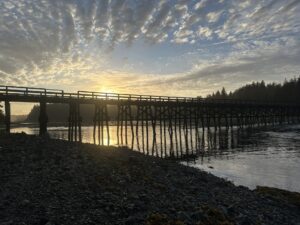 Photographer: Chloe Bjerklie, EIT | DOWL
Location: Yakutat, Alaska
Caption: The Ankau Bridge at sunset. This photo was taken during the geotechnical exploration that supported design of a new bridge for the community of Yakutat. The old timber bridge provides access to recreational and culturally significant land and the community is ready to replace it with a new, safer structure.
Overall Runner-up
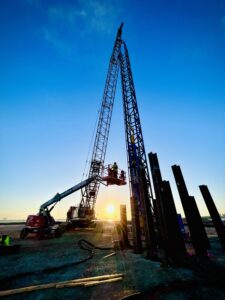 Photographer: Chamath Senevirathna, P.E. | D.W. Kozera
Location: Baltimore, Maryland
Caption: Dynamic testing of H-piles at the Hellenic Cables Manufacturing Facility project site, where safety was prioritized without compromising productivity. Rather than climbing the hammer leads to position the pile hammer, the crew used a manlift while wearing full fall-protection harnesses to safely access the work area. This proactive approach minimized fall hazards and demonstrated a strong commitment to safe work practices. The image highlights how thoughtful planning, proper equipment, and a safety-first mindset protect workers while ensuring the successful execution of complex construction activities.b
Overall Second Runner-up

Click on image for full video with sound.
Videographer: Andy Siemens, P.E., G.E. | Siemens & Associates
Location: Oregon
Caption: Seismic crew recording a shot as part of a geophysical exploration of a landslide that closed an important Oregon highway. The Siemens crew is working with the state to characterize the landslide and develop re-opening plans to restore service for local residents who have been economically damaged by the closure in many ways.
Category Winner: Technical Excellence
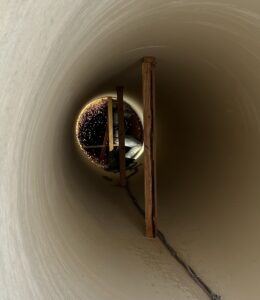 Photographer: Steve Slaymaker | CMT Technical Services
Location: Green Valley, Arizona
Caption: A CMT inspector conducts welding inspections from inside a large-diameter concrete tank/pipe section, viewed through the access opening at Quale Creek Water Treatment Plant’s 10 MG tank project.
Category Winner: Teamwork & Collaboration
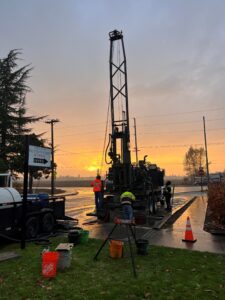 Photographer: Jack Powell, R.G., L.G. | Apex Companies
Location: Mulino, Oregon
Caption: Geotechnical drilling at Mulino Elementary School after a sunset rainstorm for a seismic retrofit project.
Category Winner: Safety in Practice
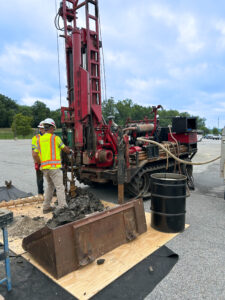 Photographer: Karl Higgins, P.E. | Hillis-Carnes Engineering Associates
Location: Prince George’s County, Maryland
Caption: This was a large project whereby we mobilized three of our own drill rigs. Each rig operator, helper and Field Engineer wore the necessary PPE. Each of the three rig work areas was organized with respect to soil spoil collection, reducing tripping hazards and overall safety of our staff. The operators placed tarps and plywood to help contain soil spoils and again reduce slip/trip hazards. I was very proud of my staff and their execution on this project.
Category Winner: Projects & Community Impact
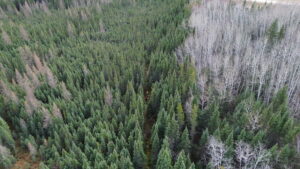 Photographer: Michael Van Helden, Ph.D., P.Eng. | TREK Engineering
Location: Manitoba, Canada
Caption: Geoprofessionals deep in the boreal forest of northern Manitoba, completing hand auger investigations as part of a study for the construction of a new bridge crossing to provide year-round access to a remote indigenous community, who currently has access via a winter ice road crossing, or a summer ferry crossing.
The information they gathered, combined with aerial photo review and terrain analysis, provided valuable insights to route the bridge and roadway alignment to minimize geotechnical risks. Our team hiked through the forest over a couple of days to explore numerous locations along potential alignments. Our safety practices included routine check-ins via satellite communication devices, and never working alone.
This project will enhance transportation access to the community of Norway House First Nation, improving access to critical supplies and offering new opportunities in the community.
Category Winner: Video
Click on image for full video with sound.
Videographer: Christopher Gardner, CPSM | Earth Systems
Location: California
GBA Seeks Subject Matter Experts for GCAP
The Geoprofessional Business Association (GBA) is seeking experienced geoprofessionals to serve as subject matter experts (SMEs) for our Geoprofessional Career Ascent Program (GCAP). GCAP is a professional development pathway that helps geoprofessionals build the business, consulting, management, and leadership skills needed throughout their careers.
The program includes the highly successful Embark Class for early-career professionals and Ascend Class for emerging managers. The classes are delivered through cohort-based learning experiences led by industry SMEs and supported by professional learning facilitation.
Embark introduces early-career professionals to the essential business and consulting skills that lay the foundation for a successful geoprofessional career. GBA is seeking SMEs to lead sessions on the following topics:
• Fundamentals
• Communication
• Soft Skills
• Ethics
• Proposals
• Business Development
• Contracts
• Risk Management
• Project Management
Ascend helps participants transition from technical contributor to project, client, and people manager. GBA is seeking SMEs to lead sessions on the following topics:
• Understanding Personality Styles
• Execution
• Time Management
• Delegation
• How to Train
• Managing Conflict
• Growth Mindset
• Emotional Intelligence
• Giving and Receiving Feedback
• Client Management Skills
• Listening Skills
More Than Teaching
Selected applicants will participate in specialized training led by GBA Learning Consultant Brock Simmons. The training series includes three virtual workshops covering:
• Principles of participant-centered training
• Context versus content in training design
• CPR of content design
• Effective use of scenarios and practical examples
• Checklists for effective training delivery and content preparation
Those who have volunteered as GCAP SMEs for past cohorts report that the experience is both energizing and rewarding, and the skills they learned benefit not only their GCAP sessions, but also their work in their own firms.
Geoprofessionals interested in being considered for GCAP teaching opportunities (beginning in 2027) are encouraged to submit an application:
Learn More About GCAP:
GBA Geoprofessional Career Ascent Program
Explore the Classes:
Embark | Ascend
Knowledge Sharing Webinar Series Returns: From Static Reports to Spatial Insights
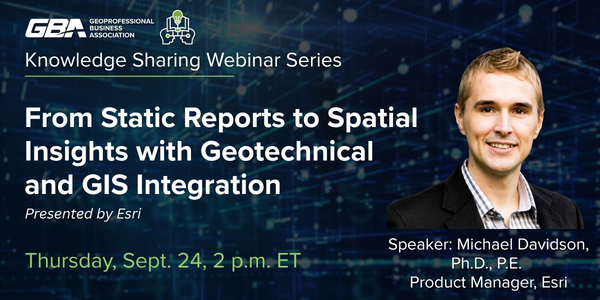
The GBA Knowledge Sharing Webinar Series returns this year with practical, business-focused presentations from trusted industry partners. The series begins on September 24 at 2 p.m. Eastern Time with a webinar from Esri titled “From Static Reports to Spatial Insights with Geotechnical and GIS Integration.”
GBA believes we can provide value to our members and business partners when we create opportunities to share knowledge about important issues affecting the geoprofessions. When we learn together, we can elevate geoprofessional value.
Presented by Michael Davidson, Ph.D., P.E., Product Manager at Esri, this session will explore how geotechnical engineers and GIS analysts can work together to improve collaboration, increase data accessibility, and support more informed project decisions.
Subsurface information is among the most important sources of project data, yet it often exists across disconnected systems and static reports. During this webinar, attendees will learn how GIS can provide a framework for organizing, analyzing, and sharing geotechnical information, helping project teams better understand subsurface conditions and project risks.
Using a transportation infrastructure case study, Davidson will demonstrate how borehole data can be integrated with GIS workflows to create enriched 3D visualizations that support design and construction activities. Rather than searching through hundreds of pages of boring logs, project teams can evaluate subsurface conditions in their geographic context and make more informed decisions.
Attendees will learn how to:
• Connect geotechnical and GIS workflows to create a shared understanding of subsurface conditions.
• Move beyond static reports with spatially enabled subsurface analysis.
• Transform borehole data into actionable 3D insights that help reduce project risk.
The GBA Knowledge Sharing Webinar Series includes timely presentations designed to help geoprofessionals stay informed about emerging trends, technologies, and business challenges affecting the industry. These webinars are free to attend and are open to members and non-members of GBA.
Register today for this free webinar and join us September 24 at 2 p.m. Eastern Time.
You only need to sign up for the webinar series once – you do not need to sign up for each webinar individually. Additional Knowledge Sharing Webinar Series dates are October 29, November 19, December 17, January 28, 2027 and February 25, 2027.
New Best Practices: Safe Work Near Moving Equipment
Incidents involving moving equipment can have severe consequences, making them one of the most significant safety risks facing geoprofessionals in the field. To help member firms better protect their employees, GBA has released “Safe Work Near Moving Equipment,” a new Best Practices resource that provides practical guidance for reducing risk when workers are on foot near moving equipment and vehicles on construction sites.
The resource recognizes a reality many geoprofessional firms face: they are often subcontractors and cannot control every aspect of a jobsite. It focuses on actions firms can take independently while also encouraging coordination with contractors and other onsite partners.
This field-tested guidance is designed for firms looking to establish safer working conditions and implement more robust controls around pedestrian-equipment interactions. Rather than relying solely on training and awareness, the document emphasizes direct, tangible measures that help protect workers even when mistakes occur. It also reviews hazard controls, situational awareness practices, and emerging technologies that can support safer operations.
Top Takeaways
• Take proactive steps to protect employees, even when working under another contractor’s site management.
• Combine worker awareness with practical safeguards designed to reduce the likelihood and severity of incidents.
Download: Safe Work Near Moving Equipment
GBA Best Practices are member-exclusive resources that provide practical guidance on the business, risk management, leadership, and operational challenges geoprofessional firms face every day. Designed to be concise and actionable, they help firms avoid common pitfalls, strengthen decision-making, and improve business performance.
Not sure if your firm is a GBA member? Learn about member benefits here: Why Join GBA.
The Risk Hidden in “As Needed” CoMET Services
The latest episode of the GBA Podcast Case History Series examines Case History #98 – How Did That Get There?, a project-management case involving geotechnical engineering services, CoMET services, reused materials, unclear scope, and a retaining-wall failure that ultimately led to litigation. Hosted by GBA Multimedia Delivery Committee Chair Elizabeth Brown, P.E. (Principal Geotechnical Engineer at JLT Consultants) and Abi Corbett (Project Consultant at SME), the episode walks listeners through a shopping center redevelopment project where a seemingly small phrase, “as needed,” became a central risk-management issue.
Brown and Corbett explore how undefined scope, limited observation, reused backfill materials, and contractor quality-control issues contributed to a dispute after a retaining wall deflected several years after construction.
Listeners will gain practical reminders about documenting assumptions, distinguishing quality assurance from quality control, communicating service limitations, and defining contract terms before they become the subject of a claim. As Abi notes in the episode, “That’s something I like to really get out in the open first thing with my projects is to very clearly say that QC is responsible for QC. I am just spot checking.” Elizabeth reinforces the broader lesson: “If you know a project is high risk, you can’t afford vague language. You need clarity and documentation and communication at every step.”
This episode offers a timely reminder that risk management does not end with a go/no-go decision. It must continue through scope development, field documentation, client communication, and dispute resolution.
About GBA Case Histories
GBA Case Histories examine real-world project and business situations that offer valuable lessons for geoprofessional consultants. These educational resources help firms strengthen risk management practices and make more informed business decisions.
About the GBA Podcast
The GBA Podcast delivers practical insights from geoprofessionals for geoprofessionals. Through conversations with industry leaders and subject matter experts, listeners gain actionable ideas to help manage risk, strengthen business practices, and improve project outcomes.
GBA Annual Report Showcases a Year of Momentum for the Geoprofessions
The Geoprofessional Business Association (GBA) has released its 2025-2026 Annual Report, highlighting a year of expanded member engagement, new professional development opportunities, practical business resources, and forward-looking initiatives designed to help geoprofessional firms lead through change.
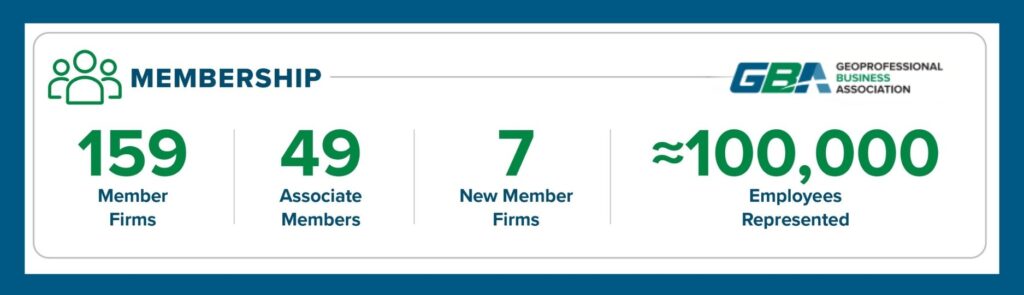
This year’s report reflects GBA’s continued focus on helping member firms reduce risk, strengthen business performance, develop leaders, and prepare for a rapidly changing professional landscape. During FY2025-2026, GBA:
• Convened the Crystal Ball Workshop on AI and automation
• Invested in new technology including ChatGBA
• Became an International Code Council Preferred Provider
• Launched Cohort 6 of the Emerging Leaders Program
• Established the Geoprofessional Women’s Group, and
• Strengthened global collaboration through a formal partnership with the Association of Geotechnical and Geoenvironmental Specialists in the United Kingdom.
The report also documents significant progress in leadership development through the Geoprofessional Career Ascent Program (GCAP). Nearly 100 early professionals graduated from the Embark Class, and GBA introduced the Ascend Class for new managers, helping member firms build stronger talent pipelines at multiple career stages.
In remarks to a recent Embark graduating class, GBA President Dan Schaefer, P.E., emphasized the importance of professional engagement beyond day-to-day project work. “Join associations, attend conferences, volunteer for committees, and build relationships with peers across our industry, and GBA is one place you can do that,” he said. “The earlier you get involved, the more impact it’ll have on your career and our profession.”
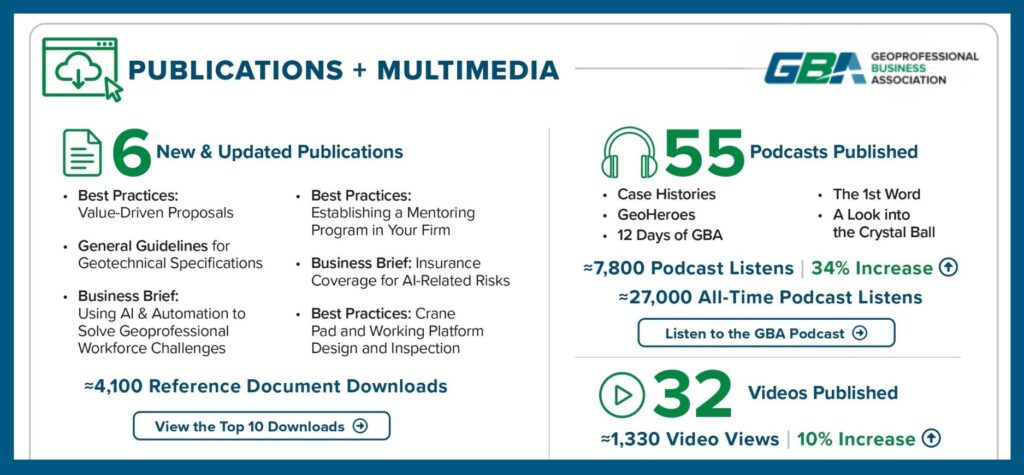
GBA also continued to expand its library of technical, business, and risk-management resources. The Association released six new and updated publications, including
• Best Practices: Value-Driven Proposals
• General Guidelines for Geotechnical Specifications
• Business Brief: Using AI & Automation to Solve Geoprofessional Workforce Challenges
• Best Practices: Establishing a Mentoring Program in Your Firm
• Business Brief: Insurance Coverage for AI-Related Risks, and
• Best Practices: Crane Pad and Working Platform Design and Inspection.
Members downloaded GBA reference documents approximately 4,100 times during the year.
GBA’s multimedia reach also grew. The Association published 55 podcast episodes across series including Case Histories, GeoHeroes, 12 Days of GBA, The 1st Word, and A Look into the Crystal Ball, generating approximately 7,800 listens, a 34 percent increase over the previous year. GBA also published 32 videos, which received approximately 1,330 views, a 10 percent increase.
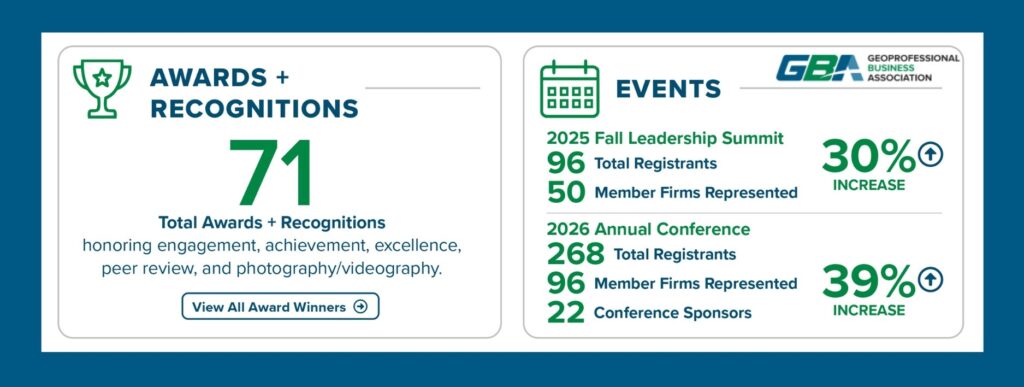
Member participation remained strong across GBA events and committees. The 2025 Fall Leadership Summit drew 96 registrants from 50 member firms, while the 2026 Annual Conference welcomed 268 registrants from 96 member firms, with 22 conference sponsors.
2026 FALL LEADERSHIP SUMMIT 2027 ANNUAL CONFERENCE
GBA’s committees included 86 active members, held 123 meetings, represented 98 companies, welcomed 54 new committee members, launched a Safety Committee, onboarded and trained five new peer reviewers, and supported the Embark Class by providing facilitators and subject matter experts.
The 2025-2026 Annual Report also shows how GBA’s accomplishments align with the Association’s 2027+ Strategic Plan, which focuses on member success, impact, and vibrancy through relevant professional development, technology-driven strategies, expanded access to resources, and greater promotion of the value geoprofessionals bring to society.
Looking ahead to FY2026-2027, GBA plans to graduate Emerging Leaders Cohort 6, plan the 2027 Crystal Ball Workshop, host our first Technology Summit, develop a mobile application, co-host a CEO Summit with CalGeo, launch a redesigned website, and convene members at the 2027 Annual Conference in Vancouver, British Columbia.
The report captures more than activity. It reflects the collective work of GBA’s volunteers, leaders, committees, staff, and member firms to share knowledge, strengthen businesses, develop people, and elevate the geoprofessions.
New GBA Case History Examines the Cost of Relying on Luck
New GBA Case History Examines the Cost of Relying on Luck
GBA has published a new Case History, Luck Isn’t a Direct Control, that explores how a series of seemingly small operational changes led to a serious incident at a remote permafrost drilling site. The case demonstrates how production pressures, changing field conditions, and insufficient hazard controls can combine to create significant safety, business, and insurance consequences.
One of the best ways to learn is from the experiences of others. GBA Case Histories share real situations faced by geoprofessionals and the lessons learned from those experiences. Covering topics ranging from risk management and project delivery to safety, contracts, and client relationships, they are valuable tools for lunch-and-learn sessions, team discussions, and professional development across GBA member firms.
The new practice-management focused Case History #118 examines safety-related business processes and decisions surrounding a drilling operation that experienced a catastrophic release of frozen soil and ice. While the work involved known risks, changes in drilling practices and operating conditions created hazards that were not fully recognized until an incident occurred. The resource offers practical lessons that firms can apply to their own projects, safety programs, and risk management practices.
Key takeaways include:
- Strong Health and Safety Plans are essential, particularly for remote work and changing field conditions.
- High-energy hazards require robust controls, conservative operating limits, and deliberate decision-making.
- Equipment selection, insurance coverage, and ongoing hazard awareness should be re-evaluated when conditions change.
One of the most valuable lessons from this Case History is that experienced professionals are not immune to risk when operational changes accumulate gradually over time. The resource reinforces the importance of stopping, reassessing hazards, and adjusting controls before work continues.
GBA members have free access to all Case Histories.
Download GBA Case History #118: Luck Isn’t a Direct Control HERE.
Not a GBA member? Learn why your firm should join HERE.
New Podcast Episode: Litigation for Collections – A Lose-Lose Scenario
The latest episode of the GBA Podcast’s Case History series explores a project that began with a routine geotechnical study and ended with a lawsuit, a settlement, and the loss of a valuable client relationship. As they discuss GBA Case History #13, “Litigation for Collections… A Lose-Lose Scenario,” hosts Elizabeth Brown, P.E. (JLT Consultants) and Abi Corbett (SME) examine how communication breakdowns, scope limitations, and business decisions can create risks that extend far beyond technical engineering.
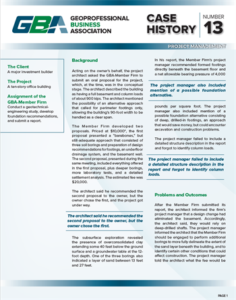 The case begins with a 10-story office building, for which a GBA member firm submitted oral proposals for a geotechnical investigation. The owner selected the lower-cost option, and as the project evolved, key design changes occurred without additional geotechnical evaluation. What followed offers important lessons about proposal practices, client communications, documentation, and managing professional relationships.
As Corbett notes during the episode, “the technical work wasn’t really the biggest problem. It was everything floating around it.”
Listeners will gain practical insights into why written proposals matter, how scope decisions can influence risk exposure, and why geoprofessional consultants must actively manage client relationships throughout a project lifecycle. The discussion also highlights how collection actions can unexpectedly trigger professional liability claims and damage future business opportunities.
The episode concludes with a powerful reminder from Elizabeth Brown: “Don’t let short-term cost decisions or emotional reactions compromise your long-term success.”
For geoprofessionals seeking practical risk-management lessons drawn from real-world experiences, this episode offers valuable perspective.
Listen here or wherever you get your podcasts.
About GBA Case Histories
GBA Case Histories examine real-world project and business situations that offer valuable lessons for geoprofessional consultants. These educational resources help firms strengthen risk management practices and make more informed business decisions.
About the GBA Podcast
The GBA Podcast delivers practical insights from geoprofessionals for geoprofessionals. Through conversations with industry leaders and subject matter experts, listeners gain actionable ideas to help manage risk, strengthen business practices, and improve project outcomes.
GBA President’s Letter to Membership, July 2026
Dan Schaefer, P.E., (Froehling & Robertson)
Greetings GBA Members,
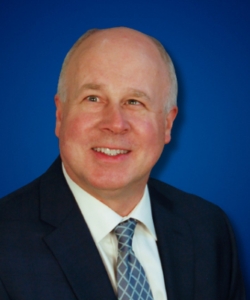 It is a tremendous honor to serve as GBA President for 2026-2027. For more than 35 years, GBA has played an important role in my professional development, providing opportunities to learn from industry leaders, build lasting relationships, and contribute to advancing our profession. I am grateful for the opportunity to give back to an organization that has given so much to me.
We’ve just begun our fiscal year, yet GBA has already built tremendous momentum following another outstanding Annual Conference in Phoenix, Arizona. This was one of GBA’s largest ever conferences and by far the largest group of sponsors! It was another signature GBA event, made possible by significant effort from the GBA Committees, Board of Directors, and of course the many months of planning by GBA staff who executed the event in stellar fashion.
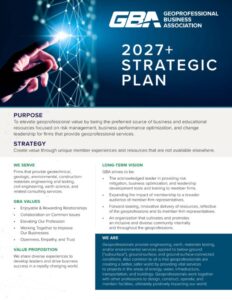 GBA has kept the momentum going since the conference, and the Committees, Board of Directors, and staff are hard at work. GBA is in year two of our 2027+ Strategic Plan that was kicked-off and energized so well last year by outgoing President Teresa Peterson, P.E., C.M.E., LEED AP O&M, ENV SP (GFT). A primary focus this year will be executing the 2027+ Strategic Plan, which has three initiatives: Member Success, Impact and Vibrancy. This plan is not just a vision and compilations of more than two dozen strategic actions, it is GBA’s guiding North Star for helping member firms thrive in an increasingly complex and rapidly changing profession. The Board will dedicate a large part of its Summer Board meeting in early August towards reviewing, optimizing and prioritizing the strategic actions from the 2027+ Strategic Plan as well as looking ahead to the next strategic plan cycle.
Many of you have heard it before: “GBA Gets Stuff Done.” This year is no exception, and we have more going on than ever. Here is just a snapshot of some of the things our Committees and Board of Directors are doing:
• Committees are central to achieving our Strategic Plan. With 12 active committees now meeting regularly, including the new Safety Committee, there has never been a better time to get involved. If you are not already participating, I encourage you to explore a committee that matches your interests,
• The Emerging Leaders Program that started its sixth cohort last November is in high gear. Twenty-two future leaders are actively developing initiatives that will benefit GBA and our members, including development of a GBA Technology Summit and GBA mobile app.
• Building on the successful 2025 Crystal Ball Workshop (CBW), a task force is already planning the 2027 installment of the CBW next June that will build off the results from 2025 and explore how skills and business practices can evolve to sustain and expand success in the face of external forces that are accelerating change and increasing complexity in our practice.
• GBA has responded to members seeking more leadership development and educational resources. The Career Continuum Task Force is now developing the third class in the Geoprofessional Career Ascent Program (GCAP), which will be titled Summit and focus on advanced leadership topics. This class will go along with the already successful Level 1-Embark and Level 2-Ascend classes. Additionally, to address the training needs of construction materials engineering and testing (CoMET) field professionals, GBA has launched a CoMET webinar series that provides affordable, high-quality training and offers ICC continuing education credits to support maintaining certifications.


• If you are looking to drive personal, professional and company growth, GBA has an affinity group for you. GBA has a series of eight facilitated peer groups based on areas of interest or job title that provide an easy way to harness the power of peer-to-peer connections. GBA’s newest affinity group, the Geoprofessional Women’s Group, launched in 2025 and became instantly successful with more than 40 members from all backgrounds within geoprofessional businesses.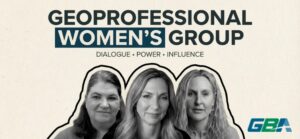
At its heart, GBA exists to help our member firms succeed as our industry continues rapidly evolving, and the firms that will thrive are those that continually develop leaders, strengthen client relationships, embrace innovation, and adapt to change. Everything we do, from committees and educational programs to peer groups and strategic initiatives, is intended to help our members become stronger businesses and trusted advisors to their clients.
I believe our profession has an extraordinary future. The challenges facing our clients continue to grow in complexity, creating new opportunities for geoprofessionals to make an even greater impact. GBA is committed to ensuring our members are prepared, not simply to respond to change, but to help lead it.
Thank you for your continued engagement and for the opportunity to serve as your President. I encourage you to stay involved, share your ideas, and take advantage of the many opportunities GBA provides. Together, we will continue strengthening our profession and helping our member firms succeed.
Please reach out to me at dschaefer@fandr.com if I can ever be of assistance.
Safety Committee Alert: Managing Wildfire Smoke and High Heat
When wildfire smoke and high heat overlap, safety teams need to evaluate both hazards together—not trade one risk for another. New guidance from the GBA Safety Committee outlines practical steps for managing these dual hazards:
Wildfire smoke is creating hazardous conditions for outdoor workers across much of the Midwest and Northeast United States. Air quality alerts are in effect in many areas as smoke from Canadian wildfires drives elevated PM2.5 levels and unhealthy air conditions.
Smoke and heat create a difficult balancing act: Poor air quality may make N95s or other respirators necessary to reduce smoke exposure, but wearing a respirator can increase breathing resistance, make workers feel hotter, and contribute to heat strain—especially during physically demanding work in summer conditions.
When smoke and heat come together, neither hazard can be managed in isolation. Instead:
- Where possible, move tasks indoors, postpone non-critical work, or reschedule work to cooler parts of the day when the risk posed by heat and smoke tend to ease.
- Adjust work/rest schedules based on the combined risk of smoke and heat and increase hydration and cooling opportunities.
- Educate your team on early signs of both heat illness and smoke-related symptoms and encourage early reporting.
- Monitor both AQI and heat conditions throughout the shift.
- For AQI: https://www.airnow.gov
- For heat conditions: https://ephtracking.cdc.gov/Applications/HeatRisk
The key lesson: Look at the whole picture and don’t let controls for one hazard unintentionally increase risk from another.
New GBA Best Practices Guide Helps Firms Develop Early Career Professionals
GBA has released a new Best Practices guide, Empowering Early Career Professionals, to help member firms take a more intentional approach to developing the next generation of geoprofessional leaders. The guide was prepared by GBA’s Inclusion Advancement Committee and focuses on practical ways firms can recruit, onboard, support, and retain early career professionals.
The first decade of a geoprofessional’s career often shapes their long-term growth, confidence, and leadership readiness. The guide notes that intentional early career professional development is an important part of succession planning for geoprofessional consulting firms, especially as firms navigate workforce changes, anticipated retirements, and a tight labor market.
Designed for firm leaders, managers, and human resources professionals, this resource offers field-tested guidance firms can adapt based on their size, culture, and resources. It can be used to strengthen onboarding, improve retention, support career growth, and build a stronger leadership pipeline.
Key takeaways include:
• Define early career professionals by years of geoprofessional experience, not age.
• Build belonging through onboarding, mentorship, sponsorship, advocacy, and varied project experience.
• Create growth pathways through leadership opportunities, career mapping, business development exposure, recognition, and advancement.
The guide also encourages firms to identify three best practices they can realistically implement in the near term, with early career professionals taking an active role in their own development.
GBA members can download “Empowering Early Career Professionals” from the GBA store:

GBA Best Practices are short, focused guides that save you from learning lessons the hard way, and they are just one of many tools available to member firms. LEARN MORE ABOUT GBA MEMBERSHIP BENEFFITS.
GBA Celebrates First Graduates of Ascend Leadership Development Class
GBA is proud to congratulate the Summer 2026 graduates of the Ascend Class, the Level 2 class in GBA’s Geoprofessional Career Ascent Program (GCAP) designed for geoprofessionals transitioning into project, people, and client management roles.
Twenty-two geoprofessionals from GBA member firms completed 12 live, virtual sessions focused on practical leadership skills including personality styles, execution, time management, delegation, training, conflict management, growth mindset, emotional intelligence, feedback, client management, and listening skills.
As a GBA member benefit that elevates geoprofessional value and firm success, Ascend supports the development of emerging managers by strengthening succession planning; improving client retention and growth; reinforcing investment in staff development; and connecting geoprofessionals with member resources
Summer 2026 Ascend Class Graduates
- Brian Ackerman, P.E., Apex
- Andrew Arnold, Terracon
- Austin Broshar, Bunnell-Lammons Engineering
- Jennifer Campbell, P.E., Earth Systems
- Matt Darden, E.I., Terracon
- Raphael Debaty, P.E., Bunnell-Lammons Engineering
- Benjamin Downing, P.E., McPhail Associates
- Jimmy Fisher, Geotechnical Consultants
- Tolleman Gorham, P.E., BSK Associates
- Kawsar Hooda, NTH Consultants
- Zachery Lilly, P.E., G2 Consulting Group
- Dylan Locke, P.E., McPhail Associates
- Danny Marker III, E.I.T., Bunnell-Lammons Engineering
- Geoffrey Matthew, P.E., Olsson
- Anjelica Moran, P.E., Terracon
- Zach Moriarty, NTH Consultants
- Priya Patel, Geo-Technology Associates
- Josselynn Schneider-Curry, P.E., Northern Geotechnical Engineering – Terra Firma Testing
- Robert Sherwood, Olsson
- Ennis Smith, SME
- Michael Travis, P.E., Geotechnical Consultants
- Lucas Vonderbank, M.Sc., P.Eng., TREK Engineering
Summer 2026 Ascend Class Subject Matter Experts:
- Vic Donald, P.E., F.GBA, Terracon
- Ryan Feist, P.E., Terracon
- Colter Lane, P.E., Jorgensen Geotechnical
- Matt Monteith, P.E., BC.GE, Kleinfelder
- Carrie Rodriguez, P.E., G.E., BSK Associates
- Tim Rodriguez, BSK Associates
- Dan Schaefer, P.E., Froehling & Robertson
- Tiffany Vorhies, PMP, NACE CIP-2, SME
- Ryan White, P.E., G.E., Apex
Commencement speaker Vic Donald challenged graduates to carry the lessons of Ascend forward into their firms, projects, client relationships, and the broader geoprofessions. “Leadership is the ability to improve outcomes, develop people, strengthen organizations, and leave something better than you found it,” he said.
The graduates’ own reflections reinforced the immediate value of the program. Zachery Lilly shared, “Before the class, I measured productivity by how busy I was. Ascend challenged me to think about the difference between being busy and actually being effective.”
Josselyn Schneider-Curry identified “the power of pausing and asking questions” as her overall takeaway from the course, while Tolleman Gorham said, “This class isn’t just tips and tricks – it’s working on yourself so you can be a better person to work with.”
Ascend is part of GBA’s Career Continuum, a four-tier GCAP pathway that includes Embark for early professionals, Ascend for management development, Summit for leadership, and Sustain for senior and specialized development. There are still a few seats available for the next Ascend class, running September 22 through December 18, 2026.
Congratulations to the inaugural Ascend graduates for investing in their growth, strengthening their firms, and taking the next step in their leadership journey.