A Revised ASTM Standard Practice for Phase I Environmental Site Assessments
By: W. Jerrold Samford, P.G., F.GBA
ASTM has revised the “Phase 1” standard practice, E1527. The revised standard should now be cited by consultants as E1527-21. While it has been submitted to  EPA for review, EPA has not issued a statement concurring that the revision meets the minimum performance requirements of the AAI process and consequently is not technically suitable for use in asserting the various “due diligence” defenses to CERCLA liability. EPA representatives were intimately involved in the revision process, and it is very unlikely that EPA will not concur. We don’t expect to see their official concurrence until sometime in the middle of 2022 at the earliest. Nothing in the revised standard reduces the level of effort, or eliminates elements of the process, compared to the previous version; consequently, a consultant complying with the requirements of the revised standard will have complied with the previous version as well. There should be no reason to avoid citing the revised standard even in the absence of formal concurrence by EPA. Additionally, because the federal “All Appropriate Inquiry” rule is a performance-based test, rather than a prescriptive procedure, EPAs concurrence states that using the ASTM standard is one method, but not the only method, of complying with AAI.
Changes made to the standard practice fall into the category of clarifications rather than substantive changes. ASTM has included examples of recognized environmental conditions (RECs, HRECs, and CRECs) that are designed to reduce perceived ambiguity in the definitions. The consultant is now also specifically required to provide not only his/her opinion of the impact of a particular situation, but also explain the logic behind the determination.
The standard has always contained the requirement that “The report shall describe all services performed in sufficient detail to permit another party to reconstruct the work performed. (Sec. 12.4).” The revision has taken this concept and embedded it within other sections of the standard, providing emphasis to the requirement. For example, Sec. 12.3 emphasizes that “A site plan showing the approximate location of features, activities, uses, and conditions …shall also be included.” This requirement, while previously unstated in the standard, was always implied by the Sec. 12.4 requirement, but too often omitted by consultants. Because there is now an explicit statement, we would expect to see better compliance.
Sections throughout the standard have been updated and clarified. For example, the list of government records has been updated to reflect the various changes in environmental databases that are available to be reviewed and changes in the names of the databases. Most of the consultants use commercial database search firms for their research. Those firms have always updated their lists as the lists evolve; consequently, this change has no real material impact on what is actually done.
Lists of historic resources have been explained in more detail while retaining the underlying requirement that research sufficient to determine the history of the Site to 1940 or first developed use is the fundamental requirement of the process.
Sec. 4.6 clarifies the viability time-frame for the Phase 1 report. Historically, the standard noted that a report completed within 180 days prior to the close of the transaction was presumed viable. EPA has previously indicated that the 180-day time period was to be measured from the completion of the critical components of the study, not from the date the report was issued. The logic behind that is clear. The revised standard now states clearly the procedure for determining the viability of a report.
Mr. Samford serves on the Environmental Business Committee and as the Chair of the Council of Fellows. He may be reached at jerry.samford@troutman.com

 mandate how under-slab plumbing is to be protected from expansive soil, reducing professional liability risk for geotechnical engineers. Rather than wait for local building codes to adopt the 2024 IPC (which will take several years), the Geoprofessional Business Association (GBA) recommends that member-firms address this issue now for project sites with expansive soils and start referencing the new 2024 IPC language now in their geotechnical reports. Details of the code change and GBA’s recommendations are provided below.
 the geotechnical engineer will need to address potential problems with foundations, floor slabs, and other structures. Water from leaking plumbing can cause expansive clay soils to swell much more than anticipated.
 until a few years after their publication, but GBA member firms can act now to reduce their risk as the standard of care changes. Rather than waiting years for these new plumbing code provisions to be enacted by the local government, GBA recommends that member firms act now for project sites with expansive soils. Taking this action now will also be beneficial for projects where the Uniform Plumbing Code (UPC) is in force; the UPC will not be making similar changes. For geotechnical reports on projects with expansive soils where the floor slab will be above a crawlspace or void forms, GBA recommends that the reports include recommendations that are consistent with this new section of the 2024 IPC, regardless of whether the IPC or the UPC is locally adopted. Specifically, the following (or similar) text could be used in a geotechnical report:
 “silver lining” for GBA and our member firms as the virtual environment delivered high-value content deep into our member firms. In fact, the attendance of GBA Conferences during the pandemic far exceeded our expectations with more than twice the number of people attending virtually as normally attend a GBA conference in person.
 validating software or spreadsheets before they are used. This Best Practices document reviews the risks of using commercial software and spreadsheets blindly or without validation which may lead to inaccurate results and exposure to loss and litigation. It also provides recommended practices to manage risk by increasing accuracy of spreadsheets and software that you can start implementing now.
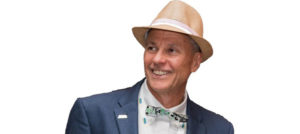 casual afternoon of information and social networking with friends and colleagues from across GBA. Tom will introduce you to friends as we wind down the week and toast the weekend with a seasonal beverage.
 for the holidays, mulled wines have been a favorite since the 2nd Century AD when Romans created the drink to fortify themselves against the cold.
 constructed pedestrian bridge at Florida International University in Miami collapsed. This case study presented by Aaron J. Mann, Esq., explores the evolution of this project, including decisions made and discussions that took place in the crucial days and hours before the collapse. Rather than a purely technical discussion about the structural shortcomings of the bridge, this presentation focuses on the ethical issues encountered in the final days of the project, the investigations and lawsuits that followed, and the impact to the project team. It is our hope that we can all learn from this tragedy. (58 minutes)
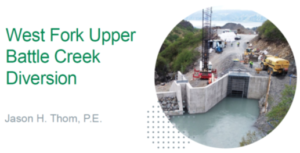 The WFUBCD construction project consisted of three miles of new access road, two miles of large diameter pipeline, a concrete core rockfill diversion dam, and the pipe outfall channel. It began in 2018 and was completed on time and 1% under projected cost of $47,782,000 in 2020, despite logistics challenges and because of innovative technologies. (48 minutes)
 team of ELC panelists, who share how being a part of this class has brought value to their firms and enhanced their personal and professional development through connection, problem- solving, and leadership opportunities. As expected, these emerging leaders bring energy, enthusiasm, and a few surprises. (37 minutes)
 names to facilitate building better relationships. Chester also helps to fuel your professional and personal development by unlocking your mind’s hidden power to easily remember facts/figures, processes/procedures, famous quotes, foreign languages, exam/training material, and much more. This is an entertaining, educational, and “memorable” program! (72 minutes)
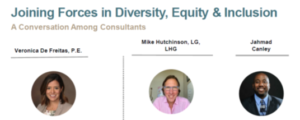 Veronica De Freitas, P.E. (Universal Engineering Sciences, LLC), a geoprofessional industry leader, Michael E. “Mike” Hutchinson, LG, LHG (GeoEngineers, Inc.), joins a DEI professional consultant, Jahmad Canley (Potential Unleashed), to discuss the challenges and opportunities they have encountered while working together to create a sustainable and inclusive culture; their experiences in executing diversity, equity, and inclusion strategies in a technical organization; success stories; and ideas for how each of us can help foster a more inclusive working environment at our own firms. (51 minutes)
 effective communication, based on neuroscience principles. What are you saying that’s causing your staff and clients to subtly feel uncooperative or defensive? Karen E. Purves, M.A.(Innovative Impact) tells you and gives you replacement words and phrases that lead to more efficient messaging and smoother collaboration. Her goal is to educate and inspire geoprofessional leaders to communicate in a more effective manner with employees, clients, and family/friends and to leave you with an immediate, specific action plan. (50 minutes)
 the rules and laws related to cannabis use in the workplace are also evolving, causing employers to face a host of challenges in response. Rochelle Doyea, Esq. (Cairncross & Hempelmann) and Terence Scanlan, Esq. (Cairncross & Hempelmann) discuss significant changes made to several states’ anti-discrimination laws; how these changes impact employers’ obligation to accommodate cannabis medical treatments; best practices for employers’ drug testing procedures and policies in compliance with Occupational Safety and Health Administration (OSHA) requirements; and the employers’ duty to accommodate on- or off-duty medical or recreational cannabis use. (49 minutes)
 rapidly evolving societal needs, and growing environmental imperatives (including climate change) present significant, existential challenges and opportunities.
 and the St. Francis Dam Disaster,” this provocatively illustrated presentation by Donald C. “DC” Jackson, Ph.D. (Cornelia F. Hugel Professor of History, Lafayette College) provides an account of how and why the St. Francis Dam came to be built, its relationship to LA’s municipal water supply system and California’s 1917 dam safety law, the geological character of the site and the cause of the dam’s tragic collapse, political factors influencing post-failure investigations, and how these investigations related to the impending Congressional passage of the Boulder Canyon Project Act (which authorized what is known today as Hoover Dam). (62 minutes)
 based on real-life events that have happened to geoprofessional firms. GBA Case Histories are unique because our members share real-life stories of problems that impacted their businesses. They also include the outcomes of corrective action, and lessons learned.
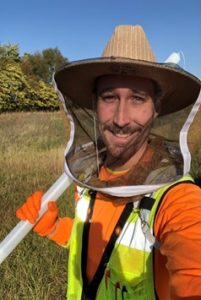
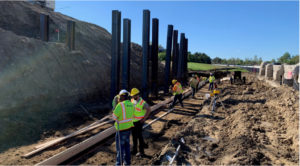
 for our 2021 photo contest we asked Members to share: “How do you depict the day in the life of a Geoprofessional?”
 Photographer: Luke Ducey (Geotechnolology)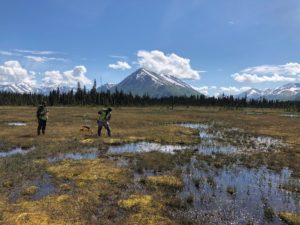
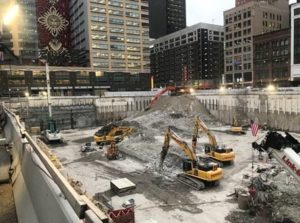 Photographer: Paul Glasser, CPG (SME)
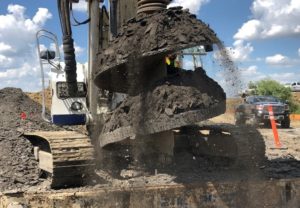 Photographer: David A. Belcher, P.E. (Terracon)
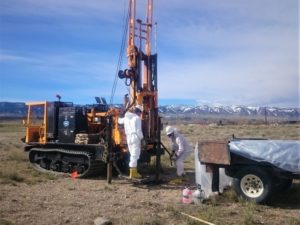 performed an environmental and geotechnical investigation at a proposed commercial development in Casper, Wyoming.IME advanced 12 test borings at the proposed site and collected soil samples.
 Photographer: Ennis Smith (SME)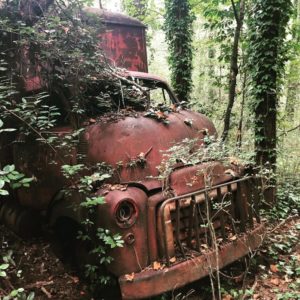
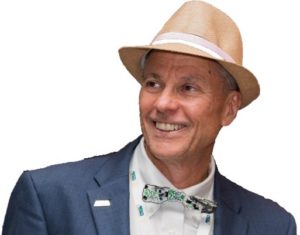 afternoon of information and social networking with friends and colleagues from across GBA. Tom will introduce you to friends as we wind down the week and toast the weekend with a seasonal beverage. Please join us for a fun and informative hour.
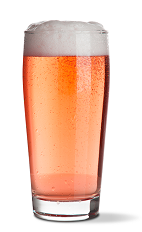
 syrup, and juice. Shake and strain into a champagne glass. Top up with champagne. Garnish with apple. Let the sweet apple flavors and hints of spice prepare you for the cool fall nights.
 that have happened to geoprofessional firms. GBA Case Histories are unique because our members share real-life stories of problems that impacted their businesses. They also include the outcomes of corrective action, and lessons learned.
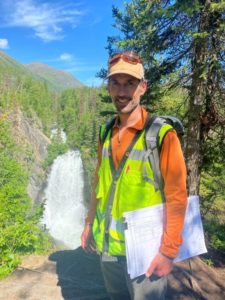 water and a desire to study the environment, I attended the University of Florida and aimed at becoming an environmental engineer. As I completed the requisite courses of the standard engineering curriculum, I quickly learned which areas of study piqued my interest and, just as importantly, those area of study that did not. With the fundamental courses successfully behind me and the opportunity to select more of my own classes to suit my interests, I gravitated to all things water resources. Finally, as I moved into my senior year, I secured an internship at a small local engineering firm working on the St. Johns River in South Florida to develop water quality sampling devices. Not long after, I was able to work on those farms and irrigation channels for the installation and implementation of the devices that I had been developing… and I was hooked!
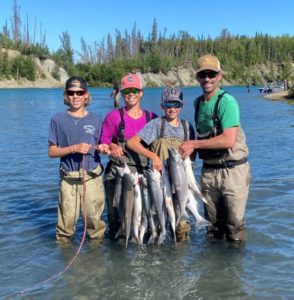 enjoying the great outdoor opportunities that Alaska has to offer. Mountain biking, hiking, fishing, and hunting bring me closer to nature and help me maintain perspective and balance in my life. My happy place is a cabin in Cooper Landing, about 100 miles from Anchorage; it’s the perfect mix of remote wilderness, mountains, river – and community. Somehow, through perseverance, dedication, and a dash of luck, I’ve been fortunate enough to find myself in the type of place I dreamed of years ago when I left Maryland at the onset of my professional journey.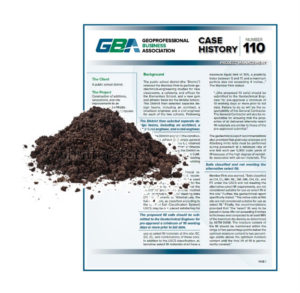
 was notified of his selection as the 2021 winner of the Professional Practice Ethics and Leadership Award for “his superior ethics, innovative spirit, and love of learning and leadership that has shaped and forever changed the engineering profession.” This annual award is bestowed on one professional engineer annually through a joint award between GBA and ASCE.
 and light lagers