We hope you had a great holiday season. As we reflect on a successful year, we would like to take a moment to thank all our loyal members, dedicated volunteers, and valuable business partners.
Below are the most popular NEWSlog stories in 2023, based on subscriber clicks. Our complimentary newsletter is published every two weeks and provides insight into opportunities and threats so your business can adapt and be more responsive, including the latest information on effective practices, legal rulings, educational events, contract clauses, employee recruitment and retention, and GBA itself.
Would you like to receive NEWSlog? SIGN UP HERE.
Happy New Year! We look forward to serving you in 2024 and beyond.
GBA News
1. ChatGPT: A Tipping Point or Disrupter for GBA Members? – GBA Executive Director Joel Carson explored the impact of ChatGPT on GBA members.
2. 2023 Photo Contest Winners Announced – These vibrant photos capture members in field activities, meeting with colleagues and clients, and observing safety in some amazing locations.
 3. Gifts for Geoprofessionals – The GBA Holiday Gift Guide – A list of more than 30 unique keepsakes and décor, books, and gadgets for the geoprofessional in your life.
4. GBA Awards Recipients – During the 2023 Spring Conference, awards were given to firms and individuals who exhibited extraordinary support and meritorious performance.
5. President’s Letter to GBA Members from President Matt Moler – The GBA President wrote about his goals for his term and reflected on GBA milestones.
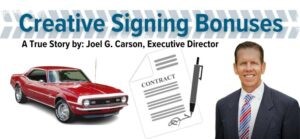
6. Creative Signing Bonuses – In times like these when identifying, recruiting, and hiring key employees, we need to be creative about employment terms and compensation. Read about how a shiny red signing bonus was the tipping point for one aggressively recruited geotechnical engineer.
 7. Updated! Best Practices: Straight Talk About Profitability – This updated Best Practices guide identifies valuable techniques firms should consider to improve their profitability.
8. NEW PODCAST – $150 Million Near Miss! – GBA’s Multimedia Delivery Committee is now delivering select Case Histories as Podcasts. In this episode public safety and a long professional relationship could be at risk after soldier piles collapse during the excavation of an ambitious project.
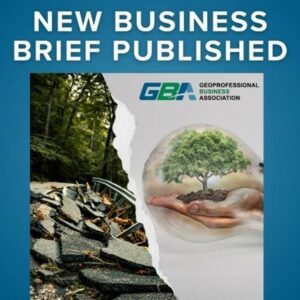
9. New GBA Business Brief: Opportunities at the Climate Crisis and Infrastructure Nexus – Key findings from the 2023 Crystal Ball Workshop that identify emerging issues and business trends, and their potential impact on geoprofessionals.
10. What GBA Members Need to Know About: Increasing Salaries – As part of the GBA Spring Conference in April 2023, the Business Practices Committee hosted round table sessions to discuss the important current issues facing the geoprofessions. Here’s what GBA members need to know from the discussion about increasing salaries.
GBA Member News
With more than 180 member firms representing over 7,000 geoprofessionals, there was plenty to talk about in 2023. Leadership changes, acquisitions, and articles showcasing GBA members’ technical expertise and standout projects were popular.
1. LANGAN Announces Leadership Promotions 2023 – Langan announced its 2023 Principal-level promotions.
2. Wind Point Partners Announces Sale of Kleinfelder to Lindsay Goldberg – In October, Wind Point Partners sold The Kleinfelder Group, Inc. to Lindsay Goldberg.
3. The Secret $62 Million Legal Fight Over the Kansas City Airport – Burns & McDonnell was awarded $62 million over legal misconduct by an attorney representing Kansas City.
4. Blackburn Consulting Celebrates 25 Years – Blackburn Consulting celebrated 25 years of excellence in 2023.
5. Strategic Growth Inspires Terracon’s Key Organizational Changes – In May, Terracon announced a new internal growth organization focused on client development, marketing, and innovation.
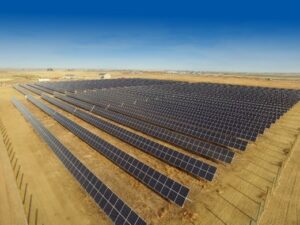
6. The Geotechnical Side of Solar Installations – UES penned an article for pv magazine on the geotechnical consultant’s role in solar projects.
 7. Aspect Consulting Joins the Geosyntec Family of Companies – In June, Aspect Consulting joined the Geosyntec family of companies and advanced a shared vision between the two for growing water supply and resilience, environmental, and geotechnical practice areas in the Pacific Northwest and beyond.
8. S&ME Celebrates 50th Anniversary – S&ME celebrated 50 years in 2023, attributing its success to its people, their technical excellence, and a companywide purpose of helping communities prosper.
9. Announcing Our New Vice Presidents – Geo-Technology Associates, Inc. announced the promotion of seven new Vice Presidents at the beginning of 2023.
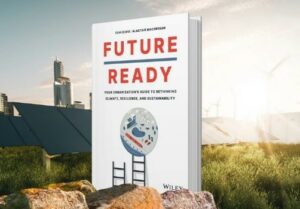
10. WSP Publishes Book About Key Climate Strategies for Organizations – WSP USA released a book that explores how organizations can rethink their climate mitigation and resilience practices for greater impact.
Industry News
GBA curates the most important headlines from across the AEC industry that hold value to GBA members, including stories on risk management, emerging markets, communications, construction materials, geology, employee engagement, environmental remediation, and more.
These are the industry headlines that were most popular with GBA readers in 2023.
1. Why Your Employees are not Reading Your Emails – 6 reasons your employees aren’t reading your emails.
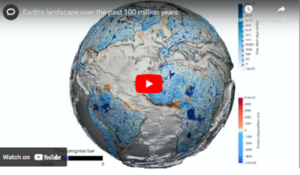
2. Geology Features: Continental Drift – Scientists just revealed the most detailed geological model of Earth’s past 100 million years.
 3. Is it Possible to do Email the Wrong Way? – How many times a day do you check your email? Many people find it difficult to create boundaries between home life and work life.
4. Big Project, Big Dispute – Contractors that built MBTA’s Green Line Extension sue design firm for $35M.
5. Engineer, Not an Engineer… Says Who? – Minnesota Engineering Board fines, censures engineer-activist for calling himself an engineer while his license was briefly expired.
6. 45 Different Email Greetings to Use at Work – “Howdy, partner!” are probably NOT the first words you want a potential client to read from you. Instead, check out some of these more apropos greetings for your business-related emails.
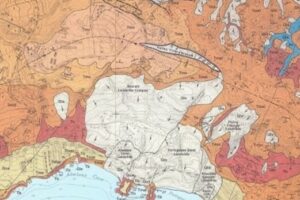
7. Landslide Feature: Wasting Away – A chunk of Rancho Palos Verdes is sliding into the sea. Can the city stop it?
 8. ChatGPT Is a Tipping Point for AI – With ChatGPT and other AI models that can communicate in plain English, write and revise text, and write code, the technology is suddenly becoming more useful to a broader population of people.
9. ‘Leaning Tower’ in Italy on ‘High Alert’ for Collapse – A protective metal cordon will be erected to “contain debris resulting from a possible collapse, to reduce the vulnerability of surrounding buildings and the exposure to the population.
10. Reality Check: The Ground Does Move – The author of this article presents an insightful illustration on structural engineering’s perspective on the geotechnical world.

 of AI on the geoprofessions. The articles, written by Enrique Farfan, Ph.D., P.E. ENV SP (HDR), explore how this technology works and its potential uses.
 expensive lessons its member firms have learned through its popular
  GBA’s Multimedia Delivery Committee launched a new GBA Podcast series called “Leadership Lounge” that features exclusive interviews with business coaches on topics like communication, culture crafting, and igniting innovation.
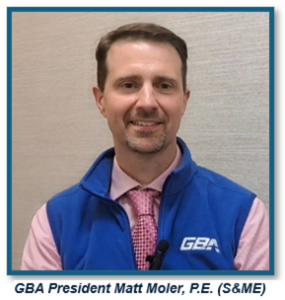 recap by GBA President Matt Moler, P.E. (S&ME, Inc.) as he shares how the event helps GBA committees drive the organization forward.
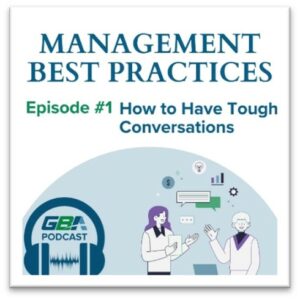 careers, and it introduces a set of new responsibilities that they may not have had in their prior role. This new podcast series highlights a handful of those responsibilities, the challenges that can go along with them, and best practices for navigating through them. The episodes in this series will provide valuable advice for new as well as seasoned managers or supervisors.
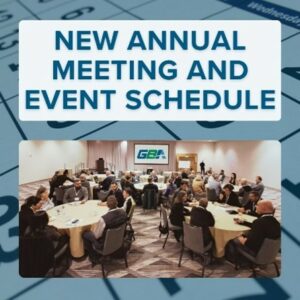 GBA Board of Directors has adopted a new schedule of events, beginning this year. GBA’s goal with these events remains to deliver conferences that have high-value content, provide collaboration and networking opportunities, celebrate the contributions of volunteer leaders, and that are warm and welcoming to all. We also want to schedule and deliver events that attract more attendees, representing more member-firms.
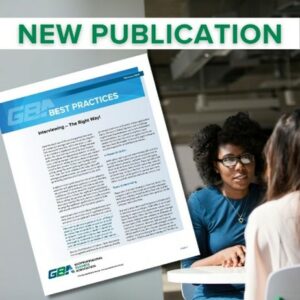 entering the industry. This workforce shortage can create a scenario where good hiring practices have been kicked to the curb. Interviewing involves a significant number of legal do’s and don’ts. Employers must understand the rule of law related to interview and application questions to ensure they’re performed in accordance with state and federal regulations.
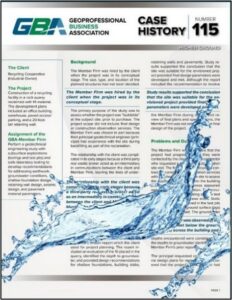 on projects that turned out successfully.
 I spent my summers and school breaks working for CTL|Thompson, Inc. Until high school, the work was primarily just picking weeds in the parking lot, jacking brass liners and cleaning them for reuse, and other cleanup work around the lab. As I got older I worked in the lab and eventually the field and on the back of a rig.
 team for my last couple of years and was the President of the affiliated club that provided support and raised money. Through rugby I had the opportunity to travel to different universities and meet a lot of people. In rugby it is tradition that the home team hosts a party after the game. The two teams fight it out on the pitch and then get together and share beers and stories after the game. We challenged one another and learned from one another. It was good training for participating in the cocktail parties at GBA. I had friends all over the Southeast Conference that were competitors and compatriots.
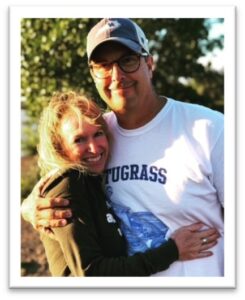 CTL|Thompson, Inc. in the accounting department as the Controller. In 2008 I was promoted to President and in 2018 I became the CEO of CTL|Thompson, Inc.

 Professional Practice Ethics & Leadership Award (PPEL), jointly presented by GBA and the American Society of Civil Engineers (ASCE). This award honors the accomplishments of a licensed professional engineer who displays outstanding engineering ethics and leadership.